The digital marketing world doesn’t wait for anyone. What worked in 2024 might already be costing you traffic, leads, and revenue today. With AI rewriting the rules of search, Indian consumers going voice-first, and social platforms turning into full-blown storefronts — 2026 is a pivotal year for every brand that wants to stay relevant.
At Futurists, we believe that preparation is the only competitive advantage. So whether you’re a startup, a growing D2C brand, or an enterprise looking to sharpen your digital edge — this guide breaks down the top 10 digital marketing trends you need to act on right now.
1. AI-Powered Personalization at Scale
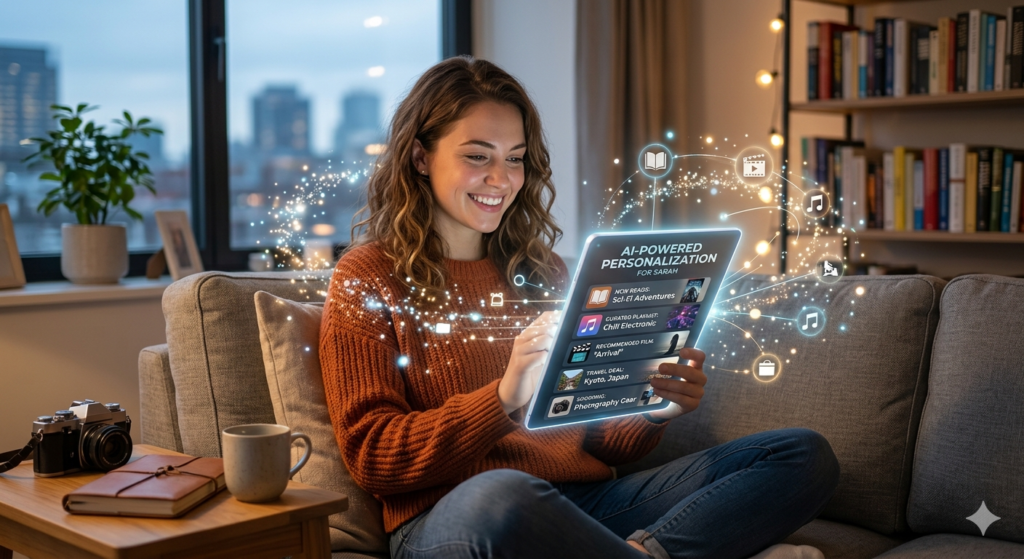
Artificial intelligence is no longer a feature — it’s the engine. Marketing teams are using AI to analyze behavior, generate content variations, and refine campaigns in real time. IE The result? Hyper-relevant experiences that feel one-to-one, even at scale.
By 2026, AI-driven personalization is projected to account for over 40% of all digital sales. If your campaigns still treat all users the same, you’re already behind.
What to do: Integrate AI tools into your email, paid ads, and website content. Use behavioral signals — past purchases, browsing history, location — to deliver the right message at the right moment.
2. Generative Engine Optimization (GEO)
SEO isn’t dead — it just evolved. Users are shifting toward conversational AI agents like ChatGPT, Gemini, and Perplexity. Brands now need to optimize content for generative engines that compile and deliver synthesized answers. This practice is called Generative Engine Optimization (GEO).
Analysis of Google AI Overviews shows significant click-through rate declines for queries where AI summaries appear — which means being cited inside an AI answer is now as valuable as ranking on page one.
What to do: Structure your content with clear H2/H3 headings, direct answers, and schema markup. Aim to be the source AI systems quote, not just the page that ranks third. Learn more about content structure best practices at out website.
3. Short-Form Video & Quick-Commerce Clips
Video has become the dominant format. Wyzowl’s 2026 State of Video Marketing Report shows 91% of businesses now use video as a marketing tool, with 82% saying video has directly helped increase sales.
But in 2026, short-form isn’t just entertainment — it’s commerce. These are 30-second videos that explain a product feature, show a testimonial, and have a “Buy Now” button on screen. YouTube Shorts has become a major search engine in its own right for Gen Z.
What to do: Develop a short-form video strategy for Instagram Reels, YouTube Shorts, and Moj. Keep clips under 60 seconds. Combine education, entertainment, and a clear CTA in every video.
4. Social Commerce: From Scroll to Sale
By 2026, social commerce is no longer optional for brands targeting online consumers. Users can discover products, read reviews, watch demonstrations, and complete purchases without leaving their favorite apps.
For India specifically, this trend is enormous. Hyper-local commerce is thriving — Meesho, GlowRoad, and Trell have proven that social-first shopping works in Tier 2, Tier 3, and even semi-rural markets. WhatsApp’s in-chat checkout is also turning conversations into conversions.
What to do: Set up Instagram Shops and Facebook catalogues. Run “Micro-Live” commerce events during Indian festivals like Diwali and Navratri. Measure full-funnel metrics — views, add-to-cart, and completed purchases.
5. First-Party Data & Privacy-First Marketing
Third-party cookies are fading. With third-party cookies becoming less reliable, brands are focusing on first-party data collected directly from their audiences. Consumers now expect content, offers, and recommendations that reflect their preferences, past behavior, and intent.
Brands are using strategies like exclusive content, loyalty perks, and personalized deals to encourage users to share first-party information — while adopting consent-based marketing and contextual advertising as core pillars.
What to do: Build your email list aggressively. Use quizzes, loyalty programs, and gated content to collect zero-party data. Make your privacy policy visible and your data use transparent.
6. Voice Search & Vernacular Optimization
With India’s linguistic diversity, voice search optimization in regional languages has become a critical growth lever. By 2026, successful brands structure content for conversational queries, long-tail keywords, and natural language processing.
With 50% of shopping in India projected to be via voice search by 2026, brands must adapt. Hindi, Tamil, Bengali, Marathi, and other regional languages now dominate voice queries.
What to do: Optimize for question-based, conversational keywords. Create FAQ sections in regional languages. Target featured snippets since voice assistants pull answers directly from them.
7. Micro-Influencers & Authentic Creator Partnerships
The age of mega-celebrity endorsements is giving way to something more powerful: trust. Micro-influencers with 1K–100K followers create 5x more engagement than celebrity influencers. Regional creators in Tier-2 and Tier-3 cities are influencing major purchase decisions.
Agencies expect micro-influencers to deliver stronger engagement than major celebrities, and brands are forming long-term partnerships with creators who align with their values — resulting in more meaningful storytelling and higher engagement rates.
What to do: Move away from one-off campaigns. Build 3–6 month creator partnerships. Prioritize niche and regional creators who speak directly to your target audience.
8. Agentic AI & Marketing Automation
Traditional automation follows “if-this-then-that” rules, while Agentic AI can make its own decisions and take actions to reach a goal. In 2026, agentic AI is handling complex marketing tasks — from booking appointments and managing ad bids to orchestrating full customer journeys without constant human oversight.
The shift is toward coordinated systems that plan, execute, and optimize campaigns with limited human intervention. Humans supervise. Agents operate.
What to do: Start with automation in email sequences and paid ad bidding. Use AI agents to handle repetitive tasks while your team focuses on strategy and brand storytelling.
9. AR/VR & Immersive Brand Experiences
Augmented Reality and Virtual Reality are bridging the gap between digital content and real-world engagement. Consumers can virtually try on products, explore homes, or test-drive vehicles from anywhere — boosting convenience, confidence, and conversion rates. 71% of consumers say they’d shop more if AR were available. IE
From IKEA’s furniture placement app to virtual makeup try-ons, immersive experiences are reducing purchase hesitation and driving higher conversions.
What to do: Explore AR-enabled product pages for your e-commerce catalogue. Even a simple “try before you buy” feature for fashion, eyewear, or home décor can reduce return rates significantly.
10. Community-Led Growth & Brand Trust
Rather than relying on pushy advertising, brands are building communities through dedicated forums, WhatsApp groups, Discord servers, and niche platforms — making user-generated content (UGC) a major trust signal.
Generic content strategies won’t cut it in 2026. Success depends on deep audience intelligence — knowing exactly what gets attention on social and why. The brands winning this year are those building real relationships, not just running campaigns.
What to do: Launch a brand community on WhatsApp or Discord. Encourage UGC through contests and re-shares. Reward loyal customers with early access and exclusive content.
The Futurists Takeaway
The top 10 digital marketing trends of 2026 point to one clear direction: earn attention, don’t interrupt it. AI is not replacing marketers — it’s elevating the ones who pair smart tools with genuine human strategy.
At Futurists, we help brands cut through the noise with analytical strategies, creative execution, and a futuristic approach built for results. If your 2026 marketing plan still looks like 2024, it’s time to level up.
Ready to future-proof your brand? Let’s talk.
3 Ways to Take Action Today:
- Audit your content — Is it structured for AI-generated answers and voice search?
- Start collecting first-party data — Build your email list before cookie deprecation accelerates.
- Book a strategy session with Futurists — Let’s map out your 2026 digital growth plan.
Frequently Asked Questions (FAQ)
Q1. What are the top digital marketing trends in 2026?
The biggest trends include AI-powered personalization, Generative Engine Optimization (GEO), short-form video commerce, social commerce, first-party data strategies, voice search optimization, micro-influencer marketing, agentic AI automation, AR/VR experiences, and community-led brand growth.
Q2. What are the latest digital marketing trends in India 2026?
India-specific trends include vernacular and voice search optimization in regional languages, WhatsApp commerce, social-first shopping on platforms like Meesho and Instagram, micro-influencers from Tier-2/3 cities, and festival-based live commerce events.
Q3. What digital marketing skills are most in demand in 2026?
The most valuable digital marketing skills in 2026 include AI prompt engineering, data analytics, GEO/SEO content writing, short-form video production, marketing automation, and first-party data strategy.
Q4. Is AI replacing digital marketers in 2026?
No. AI is reshaping how digital marketing works, not replacing marketers. AI handles analysis, automation, and personalization — but humans lead strategy, creativity, ethics, and brand voice. The best results come from combining both.
Q5. How important is video in digital marketing in 2026?
Extremely important. Over 91% of businesses now use video as a marketing tool, and short-form video (under 60 seconds) is the top-performing content format for discovery and conversion across all major platforms.
Q6. What is Generative Engine Optimization (GEO)?
GEO is the practice of optimizing your content to be cited or surfaced inside AI-generated answers from tools like ChatGPT, Google AI Overviews, Gemini, and Perplexity — rather than only targeting traditional search engine rankings.
Q7. How can small businesses benefit from digital marketing trends in 2026?
Small businesses can win by focusing on hyper-local voice search, building tight-knit WhatsApp or Discord communities, partnering with micro-influencers, and creating authentic short-form video content — all without needing a large budget.